

Porosity From Seismic
PFS Porosity from Seismic represents a groundbreaking advancement in quantitative interpretation (QI) for the geosciences.
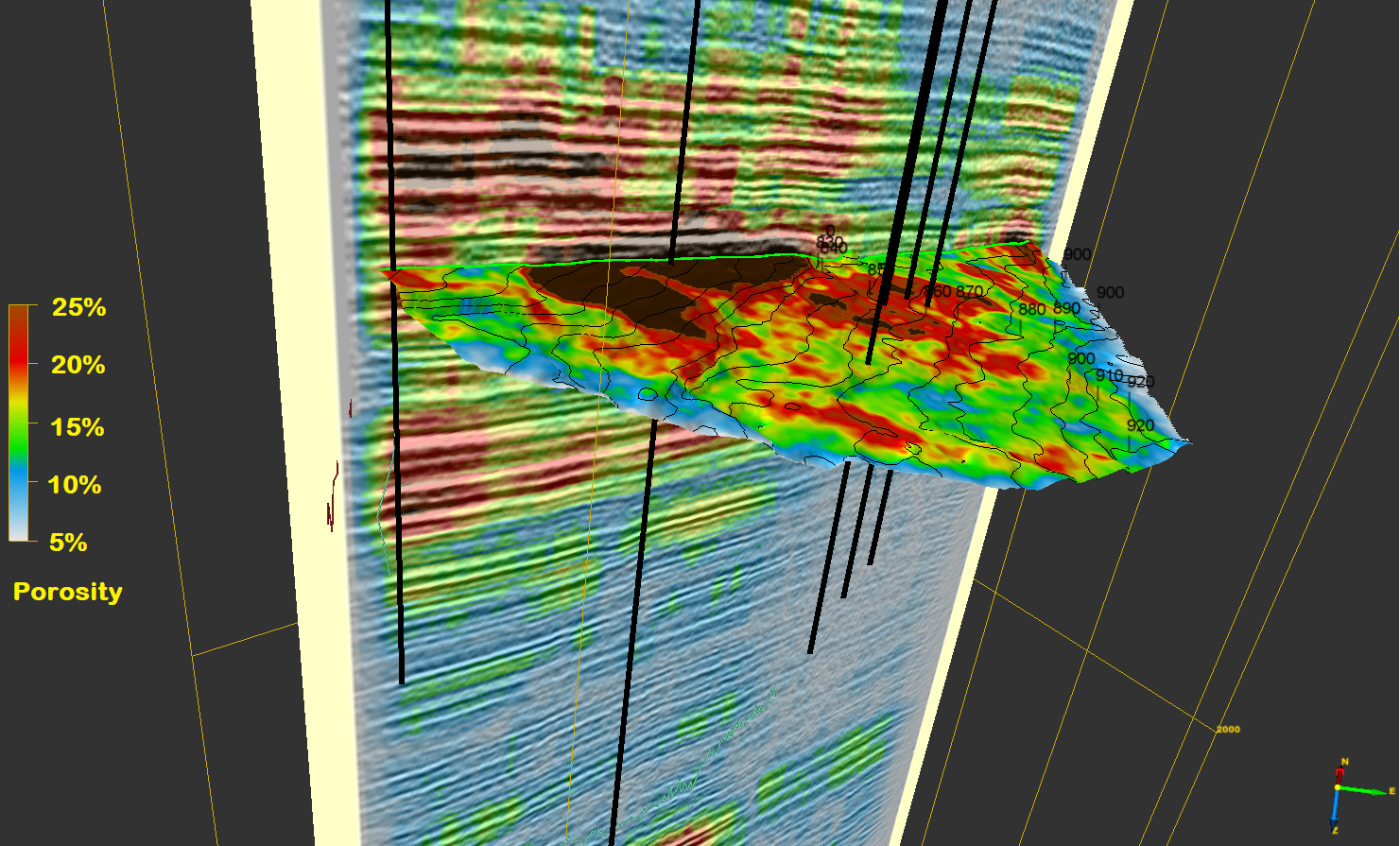
PFS A breakthrough in Seismic Attributes.
PFS is able to capitalize on subtle changes in the frequency domain for each reflection. This highly detailed algorithm operates based on spectral decomposition, a technique that allows for the simultaneous knowledge of time and amplitudes at various frequencies.
These changes have predictable seismic signatures that correlate with changes in porosity and allows for volumetric porosity volumes to be produced from off the shelf seismic data and a small amount of well calibration.
Porosity From Seismic
This innovative solution harnesses the power of advanced algorithms to directly estimate volumetric porosity from standard 2D and 3D seismic datasets. By analyzing the inherent acoustic properties and subtle amplitude variations within the seismic volume, PFS Porosity from Seismic provides a fast, non-invasive method to map subsurface porosity distribution across large areas. This eliminates the need for numerous costly and time-consuming borehole porosity measurements, offering a comprehensive view of reservoir heterogeneity and fluid potential directly from the seismic data. It empowers exploration and production geoscientists with a powerful new tool for improved reservoir characterization and appraisal.
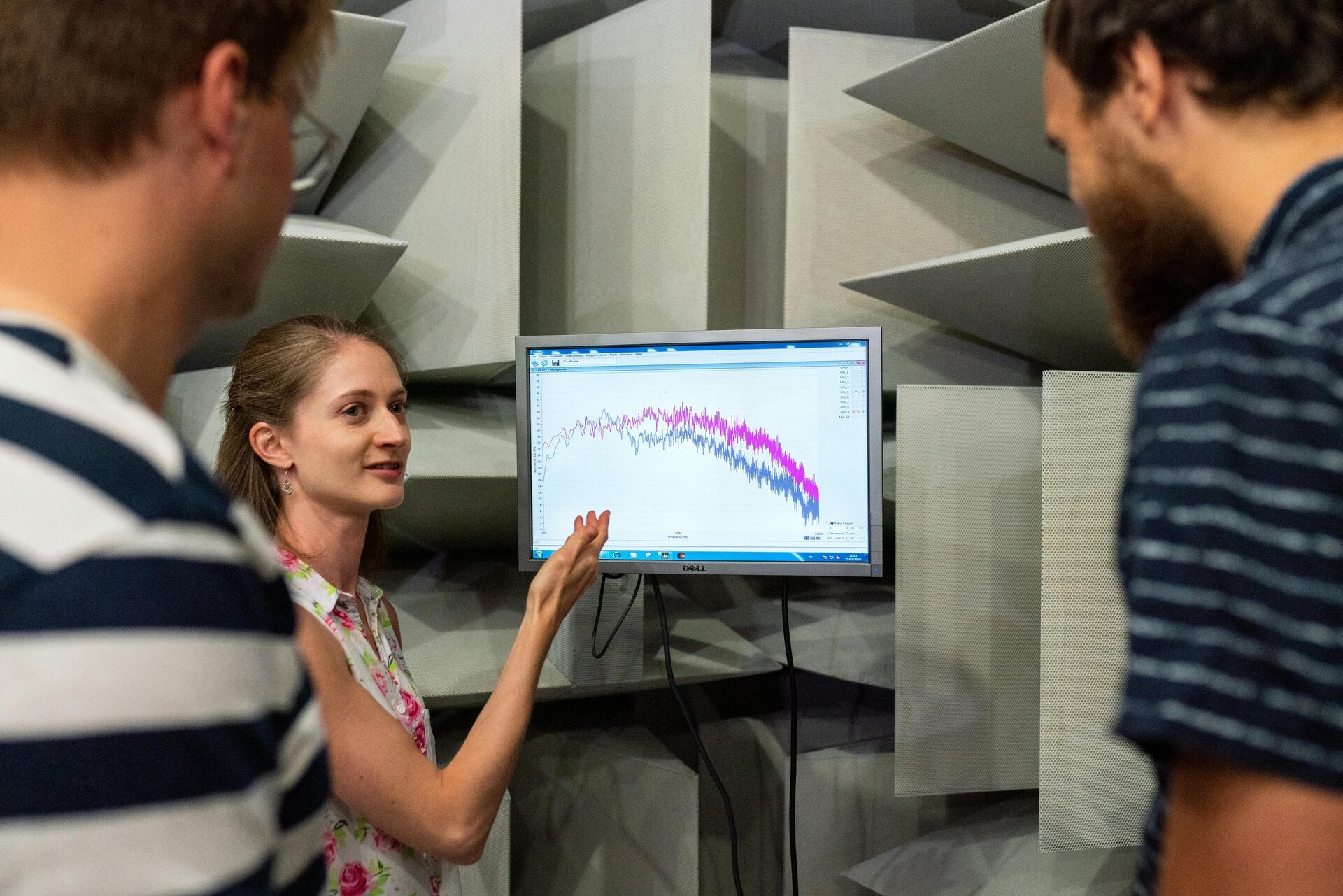
Porosity from Seismic -- Theoretical Basis
Understanding the relationship between sound absorption and material porosity
The Equation
Where Zs is the specific acoustic impedance of the porous material and Za is the specific acoustic impedance of earth layer.
Key Variables
α (α)
Sound absorption coefficient, ranging from 0 (total reflection) to 1 (total absorption)
Zs (Zs)
Specific acoustic impedance of the porous material (depends on porosity)
Za (Za)
Specific acoustic impedance of earth layer
Applications
This relationship used to compute Porosity from Seismic is routinely used used in architectural acoustics, noise control engineering, and material science to:
- Design sound-absorbing materials for rooms and buildings
- Select appropriate materials for noise reduction
- Develop porous materials with desired acoustic properties
- Analyze the effect of porosity on sound absorption